

Project Anatomy
Anatomy of a Rescue: The "Slow" Server and the Silent Backup
Jan 9, 2026 · 7 min read
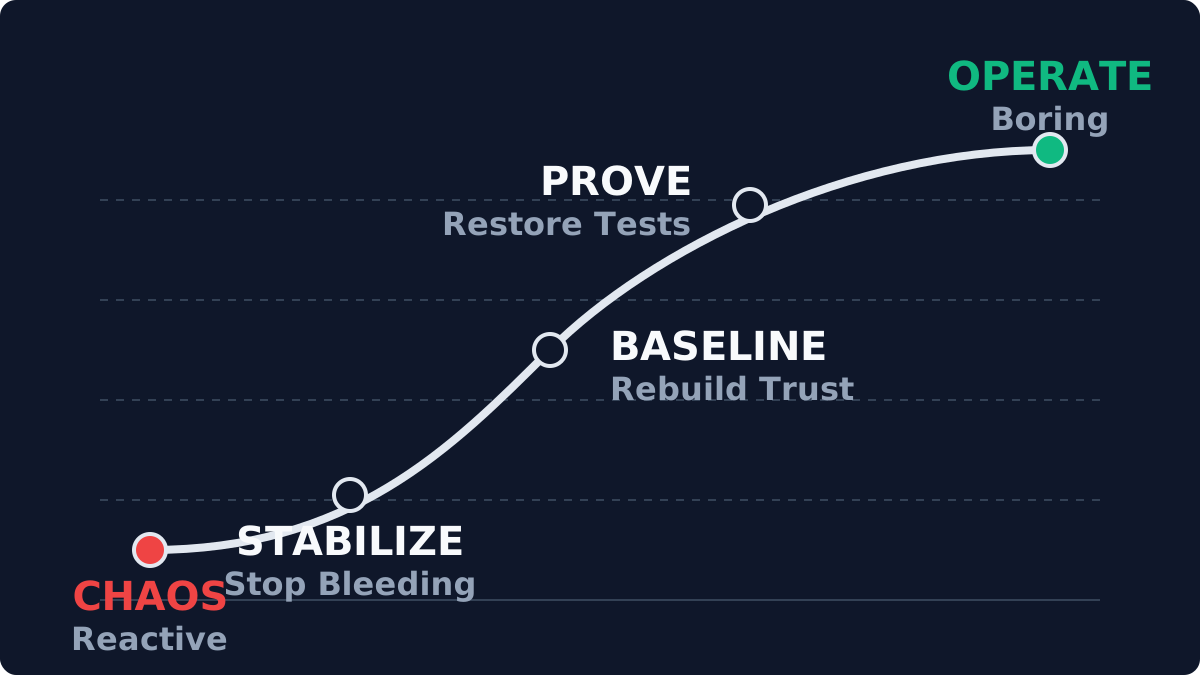
The dashboards were mostly green. The failures were quiet: snapshot debt, backup scope gaps, and clock drift. The fix was not heroics—it was reversibility, measured restores, and a stable baseline.
Outcome: Snapshot chain consolidated, restore test completed with evidence, time sources standardized, and runbook delivered.
Context (sanitized)
- Environment
- Mid-sized on-prem virtualization supporting a 24/7 operation.
- Operators
- One IT lead plus a thin support bench. Most problems surface after hours.
- The Trigger
- "The primary app is slow, backups are throwing warnings we don't understand, and users can't log in randomly on Monday mornings."
Phase 1: Assessment
vCenter looked healthy at the summary layer. The configuration details told a different story. Infrastructure rot hides in the gap between “configured” and “true.”
We ran a deep-dive assessment script (PowerCLI) and documented the findings.
1. Snapshot debt on the SQL VM
The main complaint was a slow ERP database. The initial recommendation was faster SSDs.
The real cause: the SQL VM was running on a snapshot chain created 26 months ago.
Every write traversed a delta chain. The storage latency wasn't the disk; it was hypervisor overhead managing a 2TB delta file. The snapshot had been taken before an upgrade and never consolidated.
2. The silent backup coverage gap
Veeam showed green jobs. The scope audit showed a gap.
A new cluster of application servers had been deployed six months earlier. They were added to a folder outside the backup selection group, so they had never been backed up. The dashboard was green because the jobs that existed were succeeding. Coverage was incomplete.
3. Time drift and authentication failures
The random login failures were Kerberos time skew.
The ESXi hosts were syncing time from a Domain Controller that had been decommissioned. The hosts drifted minutes apart. When a VM vMotioned between hosts, its clock jumped and Kerberos tokens failed.
Phase 2: Remediation (Controlled Changes)
We avoided aggressive fixes. Each change had a rollback path and a validation step.
Step 1: Secure the Safety Net
Before touching storage, we fixed the backups. We created a catch-all job targeting the full datacenter, ran an active full backup of the ERP system, and validated the restore in an isolated sandbox.
Step 2: Snapshot consolidation
Consolidating a 2TB snapshot on a live system requires a quiet window. The "stun" time (when the VM pauses to consolidate final disk blocks) is the operational risk.
We scheduled a maintenance window at 2:00 AM on Sunday, paused heavy application services, and initiated the removal. It took 7 hours.
On Monday, ERP reports that took 40 seconds were generating in 3.
Step 3: Standardization
We pointed all hosts to a reliable external NTP source, standardized vSwitch configurations, and updated documentation to the current baseline.
Phase 3: The Handoff
The most important deliverable wasn't the speed boost. It was the runbook.
We handed the IT Manager a "Morning Coffee Checklist":
- Check Veeam for unprotected VMs (not just failed jobs).
- Check vCenter for snapshots older than 3 days.
- Check storage capacity trends.
We automated these checks into a weekly email report.
Do you have silent drift in your environment?
If you have snapshots older than you remember or backups you haven't tested, we can bring the environment back to a stable, measured baseline.
Related notes
All notesField Report
The Idempotency Audit: When Scripts Run Twice
Jan 17, 2026 · 6 min read
Why 'check-then-act' logic is fragile, and how a script that ran twice broke production.
Checklist
Azure Foundations: The Governance Baseline
Jan 17, 2026 · 5 min read
The boring but essential checklist that prevents Azure environments from rotting into ClickOps chaos.
Checklist
What Operators Actually Check on Monday Morning
Jan 14, 2026 · 7 min read
The minimal checks that prevent silent regression when the consultants are gone.
Next step
If this problem feels familiar, start with the Health Check.
It measures drift and recovery evidence, then returns a scored report with a focused remediation plan.